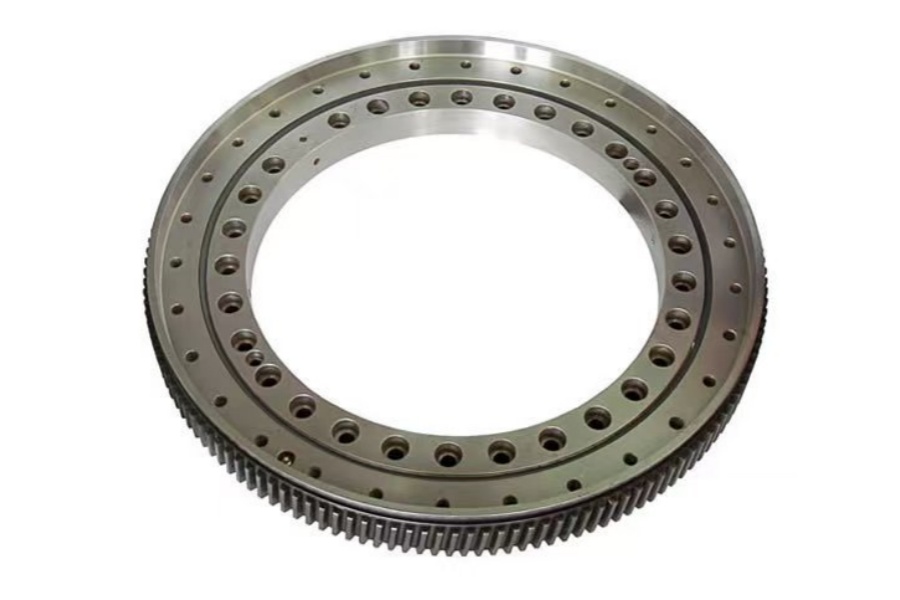
Slewing bearings are the critical backbone of heavy machinery, supporting massive axial, radial, and tilting moment loads while enabling smooth 360-degree rotation. From towering construction cranes and port machinery to automated solar trackers and cold-climate forestry equipment, these large-diameter bearings operate under diverse environmental conditions.
Among all environmental factors, operating temperature is one of the most influential variables determining slewing bearing lifespan. When temperatures plunge into arctic lows or soar into industrial heat extremes, standard lubrication fails. Selecting the correct grease and establishing a disciplined lubrication management routine are vital to preventing catastrophic premature failure.
Temperature Extremes and Their Impact on Slewing Bearing Grease Behavior
Grease is composed of a base oil, a thickener (soap structure), and performance-enhancing additives. When temperatures fluctuate, each component reacts in ways that directly impact film thickness and load-carrying capacity inside a slewing bearing.
Increased Viscosity: As temperature drops, the base oil thickens significantly. If the oil becomes too viscous, it cannot flow back into the loaded zone between the rolling elements and raceways, resulting in lubricant starvation.
High Starting and Running Torque: Over-thickened grease creates high internal fluid friction. In cold-weather applications (such as winter construction in northern regions or cold-storage facilities), this causes motor overload, sluggish rotation, and severe mechanical drag.
Soap Structure Shrinkage: Certain thickeners can contract or harden excessively at low temperatures, causing oil separation issues or rendering the grease brittle.
Thermal Degradation and Oxidation: High temperatures accelerate the oxidation of the base oil, causing it to darken, thicken permanently, and form varnish or sludge deposits.
Rapid Base Oil Bleed: Above a grease’s dropping point, the thickener matrix can collapse, causing the base oil to separate entirely from the soap. The oil leaks away, leaving behind a hard, caked residue that offers zero lubrication.
Film Thickness Breakdown: As temperature rises, base oil viscosity drops. If the oil thins out too much, the hydrodynamic lubricant film collapses, leading to metal-to-metal contact, micro-pitting, and rapid raceway wear.
Key Grease Selection Criteria for Severe Slewing Bearing Operating Conditions
Choosing a replacement or initial fill grease for a slewing bearing requires looking beyond standard multi-purpose lithium greases. Engineers must evaluate the following parameters:
A. Base Oil Viscosity (ν40)
The viscosity of the base oil at 40°C (and its viscosity index, VI) dictates the film-forming capability under load.
For low-temperature applications, select synthetic base oils (such as PAO—Polyalphaolefin or ester-based oils) with a low pour point and a high viscosity index. These maintain fluidity and low torque down to -40°C or lower.
For high-temperature applications, choose high-viscosity synthetic or heavy mineral oils fortified with anti-oxidants to withstand thermal breakdown up to 150°C–200°C.
B. Thickener Type
Lithium Complex / Polyurea Thickeners: Excellent shear stability and high dropping points (often exceeding 260°C), making them ideal for heavy-duty, high-heat industrial environments.
Calcium Sulfonate Complex Thickeners: Offer outstanding inherent corrosion protection, heavy load-carrying capacity, and high-temperature stability, making them exceptional for marine, offshore, and high-load slewing applications.
C. Extreme Pressure (EP) and Anti-Wear (AW) Additives
Slewing bearings experience high contact stresses and slow oscillatory movements, which make them vulnerable to fretting corrosion and boundary lubrication conditions. Look for greases containing solid lubricants (such as molybdenum disulfide (MoS2) or graphite) for heavy shock loads, or high-performance ashless EP additives that prevent scuffing without reacting aggressively under moisture.
Best Practices for On-Site Slewing Bearing Lubrication and Maintenance
Selecting the right grease is only half the battle; proper on-site maintenance practices ensure maximum slewing bearing longevity.
Adjust Relubrication Intervals:
In extreme cold, grease hardens and seals ports differently; verify that grease lines do not clog and adjust pump pressures accordingly.
In extreme heat, oil oxidation accelerates, meaning grease degrades much faster. Shorten relubrication intervals significantly to purge oxidized grease and replenish fresh additives.
Ensure Grease Compatibility:
Mixing incompatible thickeners (e.g., mixing a lithium-base grease with a polyurea-base grease) can cause the thickener structure to liquefy or harden, ruining the lubricant. Always perform a compatibility check or completely purge old grease when switching types.
Multi-Port Purging Routine:
Slewing bearings typically feature multiple grease nipples (zerks) around the circumference. When greasing, slowly rotate the bearing while pumping fresh grease until clean, uncontaminated grease emerges uniformly from the labyrinth seals, ensuring total old-grease displacement.
Engineered Custom Slewing Bearing Solutions by LDB Bearing
Proper lubrication management goes hand-in-hand with robust bearing design. As a professional manufacturer with over 20 years of engineering excellence, LDB Bearing provides full-spectrum rotational solutions—including four-point contact ball slewing bearings, cross-roller slewing rings, slew drives, and spur gear drives.
Recognizing that off-the-shelf products often fail under extreme operating conditions, LDB specializes in custom-engineered slewing bearing solutions tailored to your specific application challenges:
Extreme Climate Tailoring: Special raceway internal clearances, low-temperature synthetic grease pre-fills, and specialized sealing systems (IP66/IP67 rated) designed for sub-zero mining or high-heat desert environments.
Special Metallurgy & Surface Treatments: Forged 42CrMo or 50Mn structural rings with custom induction hardening depth, anti-corrosion coatings, or stainless steel configurations for aggressive environments.
Custom Integration: Tailored dimensions (200 mm to 3500 mm+ outer diameters), gear geometry (internal, external, or gearless), and pre-integrated lubrication ports to simplify field maintenance.
Conclusion
Slewing bearing reliability begins at the microscopic boundary layer between the rolling elements and the raceway. By understanding how extreme temperatures alter grease viscosity, base oil retention, and additive performance, engineers can specify advanced synthetic lubricants tailored to their operating environment.
However, achieving ultimate equipment longevity requires more than just the right grease—it demands a robust, high-precision bearing foundation. This is where LDB Bearing stands out as an industry leader. With over two decades of manufacturing expertise, advanced CNC machining, rigorous induction hardening processes, and ISO-certified quality control, LDB Bearing delivers precision-engineered slewing rings and slew drives engineered to withstand the harshest global operating conditions.
By combining LDB Bearing’s premium custom manufacturing—including temperature-tailored clearances, specialized seal configurations, and factory pre-lubrication—with a disciplined, climate-adjusted relubrication schedule, equipment managers can virtually eliminate premature raceway failure. Partnering with LDB Bearing empowers engineers to optimize rotational efficiency, protect vital capital investments, minimize costly downtime, and achieve maximum operational reliability.
Need expert advice on selecting or customizing slewing bearings for extreme climate applications? Contact LDB Bearing’s engineering team todayor request a tailored technical quote to optimize your heavy machinery’s operational reliability!
https://www.ldb-bearing.com/wp-content/uploads/2026/10/Lubrication-Management-for-Slewing-Bearings.jpg600900LDB Bearinghttps://www.ldb-bearing.com/wp-content/uploads/2021/06/l.pngLDB Bearing2026-10-12 15:59:542026-10-12 16:00:33Lubrication Management for Slewing Bearings: How Extreme Operating Temperatures Dictate Grease Selection
A slewing bearing is a large rotating component that supports heavy loads while enabling rotation between two structures. These bearings handle axial loads, radial loads, and tilting moments simultaneously. They operate in harsh environments—construction sites, mines, offshore platforms, and wind farms—where dust, water, and temperature extremes are constant threats.
Seals and lubrication work together to protect the slewing bearing from these threats. Seals keep contaminants out. Lubrication keeps moving surfaces apart. When either fails, the bearing fails prematurely. Understanding how these two systems work together helps operators extend bearing life and reduce maintenance costs.
Why Seals Are Critical for Slewing Bearing Protection
Seals are the slewing bearing’s first line of defense. They prevent contaminants from entering the raceway. They also keep lubricant inside the bearing where it belongs.
Contaminants destroy slewing bearings
Dirt, dust, water, and debris are the enemies of slewing bearings. When contaminants enter the raceway, they mix with grease to form an abrasive paste. This paste grinds away the rolling elements and raceways. The result is accelerated wear, increased friction, and premature failure.
In marine environments, saltwater ingress triggers electrochemical corrosion that degrades raceways even when the bearing is not rotating. In dusty mining applications, abrasive particles quickly destroy unsealed or poorly sealed slewing bearings.
Common seal types for slewing bearings
Heavy-duty rubber seals: Standard protection for most applications. These seals provide a basic barrier against dust and light moisture.
Labyrinth seals: Superior protection in extremely dusty or wet conditions. These seals use a complex path that contaminants cannot easily traverse.
Multi-lip seals: Enhanced protection with two or more sealing lips. Each lip provides an additional barrier against contamination.
Fluororubber seals: For high-temperature or chemically aggressive environments. These seals resist degradation from heat and chemicals that destroy standard rubber.
Seal inspection and replacement
Regular seal inspection is essential. Check for cracks, tears, hardening, or gaps between the seal and the ring. Ensure seals seat tightly with no deformation or misalignment. Replace damaged seals immediately.
Lubrication: The Second Line of Defense for Slewing Bearings
Lubrication separates the rolling elements from the raceways. It prevents metal-to-metal contact. Without lubrication, the slewing bearing would fail within hours under heavy load.
How lubrication protects slewing bearings
Proper lubrication forms a thin film between rolling elements and raceways. This film reduces friction, prevents wear, and carries heat away from contact areas. It also protects against corrosion and flushes out contaminants.
Grease types for slewing bearings
Lithium-based EP grease: Standard for most applications. Provides good extreme pressure protection and water resistance.
Polyurea grease: Superior water resistance. Good for marine and outdoor applications.
Calcium-sulfonate grease: Excellent extreme pressure properties. Good for heavy-load applications.
Synthetic grease: For high-temperature or low-temperature applications. Maintains viscosity over a wide temperature range.
Lubrication intervals for slewing bearings
Lubrication frequency depends on operating conditions:
Normal use: Every 100-200 operating hours
Heavy-duty/continuous operation: Every 50-100 hours
Proper technique ensures effective lubrication of the slewing bearing:
Clean grease nipples before injecting to avoid introducing dirt
Slowly rotate the bearing while greasing to ensure even distribution
Apply until fresh grease exits the seals to purge old grease and contaminants
Wipe excess grease to prevent dirt from sticking to overflow
How Seals and Lubrication Work Together in Slewing Bearings
Seals and lubrication are not independent systems. They work together to protect the slewing bearing. When seals fail, contaminants enter and destroy the lubricant. When lubrication fails, seals wear faster and contaminants enter more easily.
The seal-lubrication cycle
Seals keep contaminants out of the slewing bearing
Lubricant forms a protective film between rolling elements and raceways
Fresh lubricant pushes out old grease and contaminants
Seals retain the fresh lubricant
Repeat
When the cycle breaks
Seal damage allows contaminants to enter the slewing bearing. These contaminants mix with the grease. The grease becomes an abrasive paste. The paste grinds away the raceway. The bearing fails.
Lubricant degradation also breaks the cycle. When grease breaks down, it no longer protects the bearing. Friction increases. Heat builds up. Seals harden and crack. Contaminants enter. The bearing fails.
Warning signs of seal or lubrication failure
Grease leakage around the seal
Contaminated grease (discolored, gritty, or watery)
Unusual noise during rotation
Increased rotational resistance
Overheating of the slewing bearing
Visible seal damage (cracks, tears, or gaps)
Common Seal and Lubrication Mistakes
Mistake 1: Using the wrong grease
Different slewing bearing applications require different greases. A grease that works well in a dry, temperate environment may fail in a hot, wet environment. Always match the grease to the operating conditions.
Mistake 2: Mixing different greases
Different greases have different thickeners and additives. Mixing them can cause chemical reactions that break down the lubricant. Never mix grease types without thoroughly purging the old grease first.
Mistake 3: Ignoring seals during inspection
Many maintenance programs focus on lubrication and ignore seals. Damaged seals allow contaminants to enter the slewing bearing. These contaminants destroy the grease and the bearing. Inspect seals every time you lubricate.
Mistake 4: Overgreasing
Too much grease can be as bad as too little. Overgreasing creates pressure that can damage seals and cause overheating. Follow the manufacturer’s recommendations for grease quantity.
Mistake 5: Using standard seals in harsh environments
Standard rubber seals are not sufficient for harsh environments. High temperatures, chemicals, and UV exposure degrade rubber quickly. In harsh conditions, specify seals designed for those conditions.
Application-Specific Considerations for Slewing Bearings
Construction and mining equipment
These applications involve heavy loads, shock loads, and abrasive dust. The slewing bearing must be sealed against dust infiltration. Use heavy-duty rubber seals or labyrinth seals. Lubricate frequently—every 50-100 operating hours. Use EP grease with good water resistance.
Marine and offshore applications
Saltwater is the main threat. The slewing bearing must be protected against corrosion and water ingress. Use fluororubber seals or multi-lip seals for superior water resistance. Choose grease with excellent corrosion protection and water resistance. Rinse the bearing area with fresh water regularly to remove salt buildup.
Wind turbines
Pitch and yaw bearings are located high above ground. Access for maintenance is difficult. The slewing bearing must provide long service life with minimal maintenance. Use high-quality seals that resist UV and ozone. Choose synthetic grease that maintains viscosity over a wide temperature range. Consider automatic lubrication systems for consistent lubrication.
Solar trackers
Solar tracker slewing bearings operate outdoors in varying conditions. They face UV radiation, temperature swings, and dust. Some applications use lubrication-free designs with polymer sliding elements. For grease-lubricated designs, use sealed bearings with long-life grease.
Maintenance Best Practices for Slewing Bearings
Establish a maintenance schedule
Create a written schedule for lubrication and inspection. Follow the schedule consistently. Document all maintenance activities for future reference.
Use the right tools
Use a calibrated grease gun to apply the correct amount of grease. Use a torque wrench to check bolt torque. Use inspection tools to check seals and bearings.
Train operators and maintenance staff
Operators should know the warning signs of slewing bearing problems. Maintenance staff should know proper lubrication and inspection techniques. Training prevents mistakes that damage bearings.
Keep records
Record lubrication dates, grease types, inspection results, and any issues found. These records help identify patterns and improve maintenance planning.
How LDB Bearing Supports Seal and Lubrication Requirements
LDB Bearing designs and manufactures slewing bearings with robust sealing and lubrication systems. Products use verified 42CrMo forged alloy steel with induction-hardened raceways achieving 55–62 HRC and gear teeth hardened to 50–60 HRC.
LDB’s seal and lubrication capabilities:
Seal options: Heavy-duty rubber, labyrinth, multi-lip, and fluororubber seals matched to operating environments
Lubrication design: Accessible grease fittings and well-designed grease channels for even distribution
Customization: Special seals and lubricants for harsh environments, including marine and high-temperature applications
Quality assurance: ISO 9001-certified manufacturing with documented inspection reports
Engineering support: Application engineering for seal and lubrication specification
Serving 73 countries with over 500,000 units in service, LDB delivers the reliability that heavy machinery applications demand. Understanding how seals and lubrication work together to protect slewing bearings enables better selection, installation, and maintenance practices. LDB offers the technical expertise and quality assurance that equipment manufacturers and operators need for reliable, long-term operation.
Contact LDB Bearing today to discuss your slewing bearing seal and lubrication requirements.
FAQs
1. Why are seals important for slewing bearings? Seals keep contaminants out and lubricant in. Without effective seals, dirt and moisture enter the raceway, creating abrasive paste that destroys the bearing.
2. What type of grease is best for slewing bearings? Lithium-based EP grease is standard. For marine or wet environments, use polyurea or calcium-sulfonate grease. For high-temperature applications, use synthetic grease. Always match the grease to the operating conditions.
3. How often should I lubricate a slewing bearing? Lubrication intervals depend on operating conditions. Normal use: every 100-200 hours. Harsh environments: every 50-100 hours. Follow the manufacturer’s recommendations for your specific application.
4. What happens if I mix different grease types? Mixing different grease types can cause chemical reactions that break down the lubricant. This can lead to increased wear, overheating, and premature failure. Always thoroughly purge old grease before switching types.
5. How do I know if a seal is damaged? Inspect seals regularly for cracks, tears, hardening, or gaps. If you see grease leakage, discolored grease, or contaminants around the seal, the seal may be damaged and needs replacement.
https://www.ldb-bearing.com/wp-content/uploads/2026/08/Seals-and-Lubrication-for-Longer-Slewing-Bearing-Life.jpg600900LDB Bearinghttps://www.ldb-bearing.com/wp-content/uploads/2021/06/l.pngLDB Bearing2026-09-04 14:48:432026-09-04 14:48:46Seals and Lubrication for Longer Slewing Bearing Life
In the world of heavy machinery, the difference between peak operational efficiency and catastrophic equipment failure often comes down to a single, often-overlooked practice: lubrication. Slewing bearings—the large-diameter rotational components that enable cranes to swing, wind turbines to yaw, and excavators to pivot—are subjected to immense mechanical stress, environmental aggression, and continuous duty cycles. Without a meticulously executed lubrication strategy, these critical components are vulnerable to accelerated wear, frictional damage, corrosion, and premature failure. This comprehensive guide explores the science, strategy, and best practices behind effective slewing bearing lubrication, offering actionable insights to enhance performance, reduce downtime, and extend service life across diverse industrial applications.
Understanding the Critical Role of Lubrication in Slewing Bearings
To appreciate why lubrication is non-negotiable for slewing bearings, it is essential to understand the operating conditions these components endure. A slewing bearing simultaneously manages axial loads (vertical weight), radial loads (horizontal forces), and tilting moments (overturning torque). The rolling elements—whether balls or cylindrical rollers—travel along hardened raceways under extreme contact pressures, often exceeding several thousand megapascals.
Lubrication serves as the lifeblood of this system, fulfilling four indispensable functions:
1. Friction Mitigation: By creating a thin elastohydrodynamic (EHD) film between the rolling elements and raceways, lubricant separates metal surfaces, dramatically reducing friction coefficients and preventing adhesive wear.
2. Wear Prevention: Proper lubrication minimizes abrasive and adhesive wear mechanisms, preserving the geometric integrity of the raceways and rolling elements over millions of operational cycles.
3. Corrosion Defense: Marine environments, humidity, and chemical contaminants pose constant corrosion threats. High-quality lubricants contain rust inhibitors and anti-corrosion additives that form a protective barrier on metal surfaces.
4. Thermal Management: Lubricants absorb and dissipate heat generated by friction, preventing thermal runaway that can degrade material hardness and compromise bearing integrity.
When lubrication is neglected or improperly executed, friction increases exponentially, generating heat, accelerating wear, and ultimately leading to spalling, seizure, or complete bearing failure—outcomes that translate directly into costly downtime and safety hazards.
Industry Sectors Relying on Properly Lubricated Slewing Bearings
Slewing bearings are ubiquitous across heavy industries where controlled rotational movement under high loads is a fundamental requirement. The lubrication practices discussed in this guide are relevant to the following critical applications:
Construction and Earthmoving Equipment
Tower cranes, mobile cranes, excavators, backhoe loaders, and concrete pump trucks all depend on slewing bearings for their rotational axes. In these applications, bearings endure shock loads, dust, and frequent start-stop cycles, making regular lubrication essential for maintaining responsiveness and safety.
Renewable Energy Generation
Wind turbines utilize slewing bearings in their yaw systems (to orient the nacelle into the wind) and pitch systems (to adjust blade angles). These bearings operate at significant heights, often in remote locations, where maintenance access is challenging. Reliable lubrication is critical to ensuring 20+ years of trouble-free operation.
Mining and Bulk Material Handling
Stackers, reclaimers, conveyors, and crushers in mining operations rely on slewing bearings to manage enormous loads in abrasive, dusty environments. Lubrication must not only reduce friction but also flush away contaminant particles that would otherwise act as lapping compounds.
Marine and Port Equipment
Shipboard cranes, harbor gantries, offshore platform pedestal cranes, and mooring systems depend on corrosion-resistant lubricants that can withstand saltwater exposure, temperature extremes, and continuous duty cycles.
Industrial Automation and Robotics
Heavy-duty turntables, welding positioners, and robotic manipulators use slewing bearings for precision motion control. While loads may be lower, accuracy and repeatability demand consistent lubrication with minimal viscosity variation.
Selecting the Optimal Lubricant for Your Slewing Bearing
Choosing the correct lubricant is a strategic decision influenced by operating conditions, environmental factors, and performance expectations. The three primary lubricant categories are:
1. Grease Lubrication (Preferred for Most Heavy-Duty Applications)
Grease—a semi-solid mixture of base oil, thickener, and additives—is the most common lubricant for slewing bearings. Its advantages include:
Excellent retention within the bearing cavity
Long-lasting protection between regreasing intervals
Superior sealing against contaminant ingress
Compatibility with automatic lubrication systems
When selecting a grease, consider the NLGI (National Lubricating Grease Institute) consistency grade. For most slewing bearings, NLGI grades 1 or 2 provide optimal pumpability and film strength. Lithium-complex and calcium-sulfonate greases are widely preferred for their high dropping points and water resistance.
2. Oil Lubrication (For High-Speed or Specialized Systems)
Oil offers superior heat dissipation and is often used in high-speed rotating equipment or where continuous circulation is possible. However, oil requires more sophisticated sealing and containment systems, making it less common for typical heavy-duty slewing bearing applications.
3. Solid-Film Lubricants (For Extreme Conditions)
In applications involving extreme temperatures, vacuum environments, or radiation exposure, solid lubricants such as molybdenum disulfide (MoS₂) or graphite may be applied as coatings or dry films. While these are niche solutions, they provide critical functionality where liquid lubricants would fail.
Proven Lubrication Strategies for Extended Bearing Life
Adhere to Scientifically Determined Regreasing Intervals
There is no universal lubrication schedule—intervals must be tailored to operational intensity. General guidelines include:
Standard Operation (8-hour shifts, moderate loads): Regrease every 300–500 operating hours
Heavy-Duty or Continuous Operation (24/7 cycles): Regrease every 100–250 hours
Extreme Environments (high heat, dust, or moisture): Increase frequency by 50–100%
Intermittent or Standby Equipment: Lubricate before extended storage and periodically during downtime to prevent lubricant separation
Manufacturers like LDB provide specific interval recommendations based on bearing size, load spectrum, and environmental conditions, ensuring optimized maintenance schedules.
Ensure Complete and Uniform Lubricant Distribution
Effective lubrication requires that grease reaches all critical contact zones. To achieve this:
Rotate the bearing slowly while introducing fresh grease to ensure even distribution across the entire raceway circumference.
Apply grease at multiple injection points (typically 2–4 fittings) to avoid channeling.
Continue lubricating until fresh grease visibly exits the seals, indicating that old, contaminated lubricant has been expelled.
Avoid the Over-Lubrication Trap
While insufficient lubrication is clearly detrimental, excessive lubrication can be equally problematic. Over-greasing can:
Cause overheating due to churning of excess grease
Lead to seal extrusion or rupture
The correct approach is to apply grease slowly, at recommended pressures (typically under 150 bar), and cease flow when resistance increases or fresh grease appears at the seals.
Implement Rigorous Contamination Control
Contamination is the leading cause of premature slewing bearing failure. Effective measures include:
Using seals with multiple lips and labyrinth geometry to block external particulates
Applying grease through clean, capped fittings to prevent dirt ingress
Maintaining positive internal pressure through proper grease fill levels to prevent moisture suction
Regularly cleaning the bearing exterior before regreasing to avoid pushing contaminants into the raceway
Deploy Automated Lubrication Systems Where Feasible
For critical or inaccessible equipment, automatic lubrication systems deliver precise grease volumes at predetermined intervals. These systems reduce human error, ensure consistent lubrication, and can be integrated with condition monitoring platforms—a direction championed by LDB in their smart bearing solutions.
Common Lubrication Pitfalls and How to Avoid Them
Mistake
Consequence
Preventive Measure
Using incompatible grease types
Additive reactions cause thickening or separation
Flush bearing thoroughly before switching lubricants
Ignoring storage recommendations
Grease hardens or separates over time
Store in cool, dry conditions; rotate stock
Failing to inspect seals
Contamination enters through damaged seals
Inspect seals every regreasing cycle
Neglecting temperature effects
Viscosity changes reduce film strength
Choose multi-grade greases with wide operating ranges
Lubricating without rotation
Incomplete raceway coverage
Rotate bearing during and after greasing
Diagnostic Signs of Inadequate or Deteriorated Lubrication
Operators and maintenance personnel should remain vigilant for early warning indicators that lubrication is failing:
Audible Cues: Grinding, clicking, or squealing noises during rotation suggest insufficient film thickness or metal-to-metal contact.
Thermal Anomalies: Unusual temperature increases at the bearing housing—detectable via thermal imaging—indicate excessive friction.
Vibration Patterns: Increased vibration levels, especially at specific rotational speeds, may signal raceway damage from inadequate lubrication.
Lubricant Condition: Discolored, contaminated, or oxidized grease—showing signs of water emulsification, metallic particles, or burnt odors—requires immediate replacement.
Seal Condition: Cracked, hardened, or extruded seals allow contaminants to enter, accelerating wear.
Regular condition monitoring—using vibration analysis, ferrous debris detection, and temperature logging—enables early intervention before minor issues escalate into major failures.
Maintenance Best Practices for Long-Term Slewing Bearing Performance
A proactive maintenance culture is essential for maximizing bearing life. Recommended practices include:
Establish a Rigorous Lubrication Schedule
Documented schedules, integrated into Computerized Maintenance Management Systems (CMMS), ensure that lubrication is never overlooked. These schedules should specify grease type, volume, frequency, and application method.
Maintain Comprehensive Maintenance Records
Detailed logs of lubrication activities, observations, and measurements create a historical database that can reveal trends, predict failures, and justify maintenance investments.
Train Operators in Lubrication Fundamentals
Front-line operators are the first to detect abnormal bearing behavior. Training them to recognize early warning signs and perform basic lubrication tasks empowers them to contribute to equipment reliability.
Use Premium-Grade Lubricants from Reputable Suppliers
Cost savings from cheaper lubricants are quickly offset by increased wear and downtime. Invest in high-quality greases with documented performance in similar applications.
Conduct Periodic Bearing Health Inspections
Scheduled visual inspections, accompanied by grease sampling and analysis, provide quantitative data on bearing condition. Oil analysis laboratories can measure particle count, water content, additive depletion, and viscosity to assess lubricant performance.
The LDB Advantage: Precision Engineering Meets Lubrication Excellence
When selecting slewing bearings for demanding industrial environments, the quality of the bearing itself is as critical as the lubrication applied to it. LDB stands as a distinguished manufacturer committed to delivering slewing bearings and slew drive assemblies that combine robust metallurgy, precision machining, and advanced sealing technologies.
LDB engineering philosophy recognizes that even the finest bearing will fail without proper lubrication. For this reason, LDB designs its bearings with:
Optimized Raceway Geometries: Engineered to promote lubricant flow and retention, reducing starvation risks
Integrated Lubrication Channels: Pre-drilled passages and strategically positioned fittings that simplify regreasing
Advanced Seal Systems: High-performance labyrinth and lip seals that retain lubricant while excluding contaminants
Material Compatibility: Raceway steels and heat treatment profiles that maximize fatigue life under boundary lubrication conditions
Application-Specific Recommendations:LDB provides detailed lubrication guides tailored to each customer’s operating environment
Furthermore, LDB actively supports the integration of smart lubrication systems, offering bearings pre-configured for automated lubrication and condition monitoring sensors. This forward-thinking approach ensures that LDB slewing bearings and slew drive units remain reliable under the most punishing operational profiles, reducing total cost of ownership and maximizing return on investment.
Conclusion: Lubrication as a Strategic Investment
The performance and longevity of slewing bearings are directly proportional to the quality and consistency of lubrication they receive. Far from being a routine maintenance chore, lubrication represents a strategic investment in operational reliability, safety, and profitability. By selecting appropriate lubricants, adhering to scientifically determined intervals, implementing contamination controls, and leveraging modern condition monitoring technologies, industries can achieve optimal slewing bearing performance across decades of service.
For organizations seeking to maximize their equipment reliability, partnering with a bearing manufacturer that understands the interplay between design, materials, and lubrication is essential. LDB delivers precisely this expertise—offering not only world-class slewing bearings and slew drive assemblies but also the application knowledge required to keep them performing at peak levels. In the competitive landscape of heavy industry, every ounce of uptime counts. Proper lubrication, supported by LDB engineering excellence, ensures that every rotation delivers value.
Frequently Asked Questions (FAQ)
Q1: How often should slewing bearings be regreased? A: Regreasing intervals depend on duty cycle, load, and environment. Under normal industrial conditions, intervals typically range from 300–500 operating hours. Heavy-duty or harsh environments may require more frequent lubrication. Consult LDB guidelines for application-specific recommendations.
Q2: Which lubricant type is best for slewing bearings? A: Grease (NLGI 1 or 2) with lithium-complex or calcium-sulfonate thickeners is generally recommended for most applications due to its retention properties and resistance to water washout. Select greases with appropriate base oil viscosity for your operating temperatures.
Q3: What are the risks of insufficient lubrication? A: Inadequate lubrication leads to increased friction, accelerated wear, localized overheating, and ultimately spalling or seizure. These failures often require expensive bearing replacements and unplanned downtime.
Q4: Can excessive grease application damage slewing bearings? A: Yes. Over-lubrication can create excessive internal pressure, leading to seal damage, churning-induced heating, and grease degradation. Always apply grease slowly and stop when fresh lubricant appears at the seals.
Q5: Does the lubricant affect the performance of the slew drive assembly? A: Absolutely. The slew drive unit relies on the slewing bearing for smooth motion. Lubrication quality directly influences the slew drive’s efficiency, positional accuracy, and lifespan. Proper lubricant selection is critical for optimal slew drive performance.
Q6: How can I tell if my bearing grease needs replacement? A: Visible indicators include darkening, thickening, separation, water contamination, or the presence of metallic particles. Routine grease sampling and analysis provide quantitative data to guide replacement decisions.
Introduction: Why Is Lubrication Critical for Slewing Bearings?
Slewing bearings are essential components in heavy-duty machinery such as cranes, excavators, wind turbines, and industrial robots. Designed to handle axial, radial, and moment loads simultaneously, these bearings experience substantial stress and wear during operation. Proper lubrication is not just a maintenance task—it is a critical factor that affects bearing performance, reliability, energy efficiency, and service life.
This article outlines best practices for slewing bearing lubrication, including grease selection, lubrication intervals, application methods, and key considerations related to supplier quality, manufacturer guidelines, and pricing. It also highlights how LDB Bearing delivers optimized lubrication solutions for various industries.
Understanding the Function of Lubrication in Slewing Bearings
Lubrication serves several vital functions:
Reduces Friction: Ensures smooth movement of rolling elements
Minimizes Wear: Protects raceways and gears from metal-to-metal contact
Prevents Corrosion: Forms a protective barrier against moisture and contaminants
Dissipates Heat: Reduces operating temperature and thermal deformation
Without sufficient lubrication, slewing bearings are prone to premature wear, pitting, and eventual failure.
Choosing the Right Lubricant: Grease Types and Properties
Grease Base Types
Lithium-Based Grease: Common and cost-effective; suitable for general applications
Calcium-Based Grease: Offers better water resistance but lower temperature range
Polyurea-Based Grease: Excellent high-temperature stability; used in wind turbines and offshore equipment
Key Properties to Consider
Viscosity: Determines film strength and operating temperature range
Dropping Point: Should be 30–50°C above maximum operating temperature
Corrosion Inhibitors: Protect metal surfaces in high-moisture or salty environments
Special Additives
Molybdenum disulfide (MoS2) is often used to enhance load-carrying capacity and anti-wear performance.
Lubrication Intervals and Quantity Guidelines
Proper relubrication intervals depend on multiple factors:
Operating Hours
Rotation Frequency
Environment (dust, water, chemicals)
Bearing Diameter and Load
Typical Interval Ranges:
Light-duty indoor use: every 500 hours
Heavy-duty outdoor use: every 100–250 hours
Wind turbines: every 6 months or per OEM specs
Quantity Estimation Formula: Where:
Q = grease quantity (grams)
D = bearing diameter (mm)
B = bearing width (mm)
Always consult the manufacturer’s technical datasheet or maintenance manual for application-specific values.
Lubrication Application Methods
Manual Grease Gun
Cost-effective, simple, and ideal for small systems
Centralized Lubrication System
Suitable for large machinery and continuous operation
Reduces downtime and ensures even distribution
Automatic Lubricators
Used in remote or hazardous environments
Reduces human error and ensures consistent greasing
Common Lubrication Mistakes to Avoid
Over-lubrication: Can cause seal damage and overheating
Under-lubrication: Increases metal contact and accelerates wear
Using Incorrect Grease Type: May lead to compatibility issues or performance loss
Mixing Grease Brands: Can cause chemical degradation
Supplier and Manufacturer Guidelines
When selecting a lubricant, always ensure it meets the bearing manufacturer’s specifications. Working with a reliable supplier that provides grease compatibility data and technical support is essential.
Price Considerations
High-performance grease may cost more upfront but reduces long-term maintenance and replacement costs
Bulk purchase from certified suppliers offers cost efficiency
LDB Bearing’s Lubrication Strategy and Solutions
LDB Bearing not only supplies slewing bearings but also offers tailored lubrication plans for various applications.
Features of LDB’s Lubrication Solutions:
Pre-filled Bearings: Ready-to-install bearings pre-lubricated with application-specific grease
Lubrication Channels: Integrated designs that support automated or manual relubrication
Sealing Technology: Advanced seals prevent contamination and retain grease longer
Consultation Services: Assistance with lubricant selection and interval planning
Industries Served:
Construction equipment
Offshore and marine platforms
Renewable energy (solar and wind)
Mining and bulk handling systems
Conclusion
Effective lubrication is the cornerstone of slewing bearing performance. Choosing the right lubricant, applying it properly, and following the correct maintenance schedule can drastically increase bearing life and reduce operational costs.
With its engineering expertise and customizable solutions, LDB Bearing stands out as a trusted manufacturer and supplier of slewing bearings and lubrication systems. Whether you’re seeking a complete solution or just expert advice, LDB can support your operational goals.
Visit www.ldb-bearing.com to learn more or request a product recommendation.
https://www.ldb-bearing.com/wp-content/uploads/2025/07/503.jpg600900ldbadminhttps://www.ldb-bearing.com/wp-content/uploads/2021/06/l.pngldbadmin2025-07-22 16:57:282025-07-22 16:57:30Lubrication Best Practices for Slewing Bearings: Maximizing Performance and Service Life